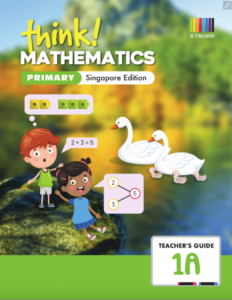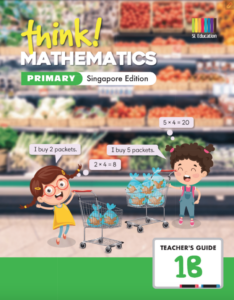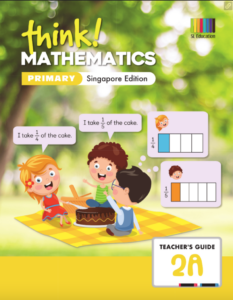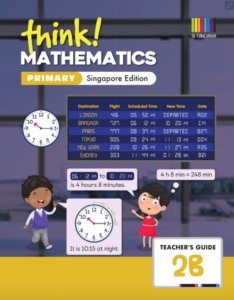

think! Mathematics
Think Mathematics Singapore Edition is a resource to inspire more teachers to teach lessons in a problem-solving approach that is consistent with the various learning theories. The Primary Series is the latest and most up to date version written by world renowned expert Prof Yeap Ban Har.
think! Mathematics
The Learning Partnership is pleased to announce that we are the sole distributor for think! Mathematics in Wales and the UK. Schools can purchase the latest learning resource materials written and developed by world renowned expert Prof Yeap Ban Har based on the latest educational research and classroom studies.
Ordering will initially be through The Learning Partnership’s website Think Mathematics. Schools can download the order form and email their orders to The Learning Partnership. This will initially be for schools only through invoicing. A new online website for think! Mathematics will be ready soon to take orders online and epayments in the UK. (Anticipated early summer 26)
Download The Think Mathematics Order Form: Think Mathematics Order Form
Think Mathematics (Singapore Edition) is used primarily as a resource, the general approximation of years for the UK is as follows:
Primary 1A and 1B – Year 2
Primary 2A and 2B – Year 3
Primary 3A and 3B – Year 4
Primary 4A and 4B – Year 5
Primary 5A and 5B – Year 6
Primary 6A and 6B – Year 7
Prof Yeap Ban Har is currently finalising Primary 5B ready for purchasing soon. Primary 6A and 6B, which equates to Year 7, lower secondary, is anticipated to be ready for ordering late 2026. All materials are currently only available through the medium of English.
think! Mathematics
Think Mathematics (Singapore Edition) is a resource to inspire more teachers to present lessons in a problem-solving approach that is consistent with the various learning theories, especially the Concrete, Pictorial, Abstract approach (CPA, Jerome Bruner).
Think Mathematics explores the teaching of Mathematics through a problem-solving approach and is designed for teachers to unfold lessons that are consistent with the idea that Mathematics is about thinking and figuring things out for ourselves.
Guiding Principles
think! Mathematics provides teachers with suggestions and is no way prescriptive. The Teacher Guides are designed to inspire teachers to teach great lessons giving them significant content to understand the basic building blocks and concepts involved. Teachers are encouraged to conduct the lessons in ways that they are comfortable with, keeping in mind a few principles.
Key Principles
• Exploring before structure
• Concrete before abstract
• Meaning before procedure
• Learning before practise
• Enriching before acceleration
Lesson Structure
Teachers are encouraged to conduct the lessons in ways that they are comfortable with, as long as their pupils have opportunities to engage with five learning experiences.
Five Learning Experiences
• Exploring
• Formalising
• Journaling
• Reflecting
• Practising
Classroom Strategies to Support Learners
The goal is to minimise the number of pupils who are unable to achieve the lesson outcome. Guidance is provided to support struggling learners but also to challenge advanced learners (Jo Boaler – Low Floor, High Ceiling). This is addressed by using three strategies:
Provide pupils with concrete materials
This provides pupils with more opportunities to learn through the manipulation of objects.
Use of Anchor Tasks
A unique feature of Think Mathematics is the explicit use of anchor tasks. The anchor tasks are based on educational research on how learning materials impact on behaviour and learner outcomes (100 Classroom Research Study). The collection of well researched anchor tasks used in a certain way helps guide the learners in achieving expected outcomes. The anchor tasks provide pupils with ample processing time to accommodate new and difficult ideas. The discussion of multiple ways, which include concrete methods and pictorial methods as well as methods that are more literal, provides struggling learners with at least one method that they can employ.
Have pupils work collaboratively
In a collaborative setting, pupils get to learn by watching their more able peers model certain ways of thinking and doing things. By using more oral language in the initial learning, they also get to negotiate for meaning in a more private and less overwhelming setting.
In think! Mathematics, methods that are more literal, less abstract are more accessible to learning through well-constructed authentic anchor tasks.
Download The Think Mathematics Order Form Think Mathematics Order Form